
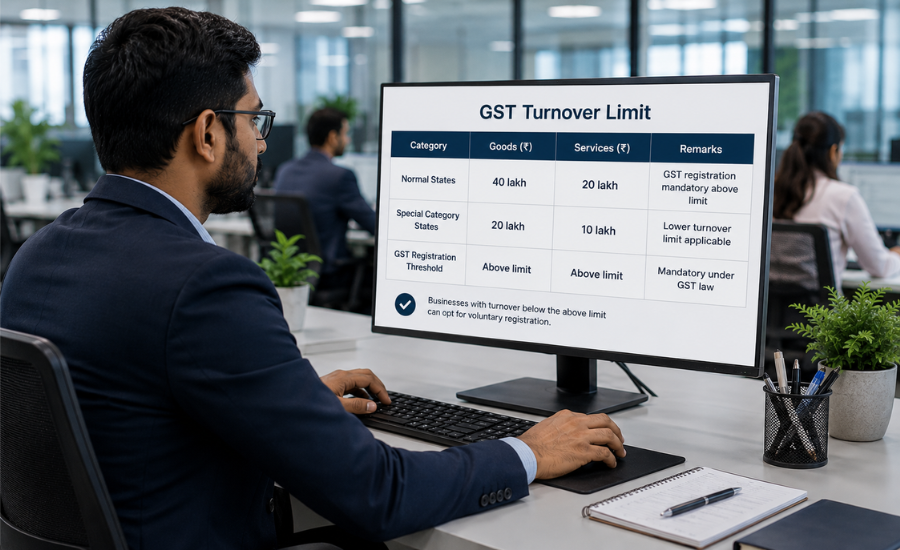
What Is The GST Turnover Limit?
Learn what is the GST turnover limit, registration thresholds, eligibility, calculation methods, and GST compliance in India.
The turnover threshold differs depending on the type of business, nature of supplies, and the state in which the business operates. Knowing these limits helps businesses remain compliant, avoid penalties, manage taxation effectively, and plan future growth.
- Understand GST Eligibility
- Ensure Tax Compliance
- Comprehensive consulting services
- Designed for established businesses
- Full range of consulting services
- Priority email and phone support
Introduction
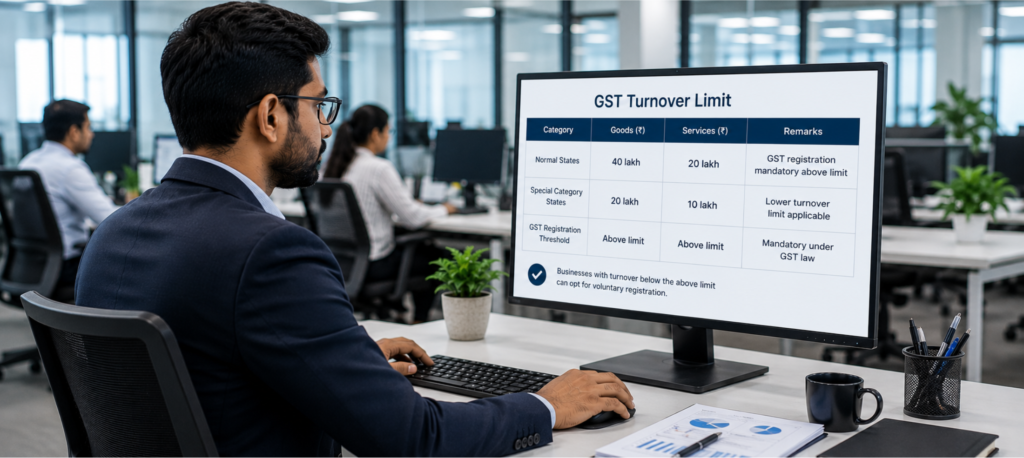
Understanding What Is The GST Turnover Limit? is essential for every business owner, startup, trader, manufacturer, and service provider operating in India. The GST turnover limit determines whether a business is required to register under the Goods and Services Tax (GST) system. Crossing the prescribed turnover threshold makes GST registration mandatory, while businesses below the limit may remain unregistered unless they fall under compulsory registration categories.
Whether you are launching a new business, expanding into new markets, or reviewing your tax obligations, understanding GST registration limits can help you make informed decisions. This guide explains GST turnover limits, eligibility criteria, calculation methods, compliance requirements, and other important considerations that every business should know.
Why This Service is Important
Knowing the GST turnover threshold offers several business advantages:
- Helps determine whether GST registration is mandatory.
- Prevents penalties for delayed GST registration.
- Improves legal and tax compliance.
- Enables better financial planning.
- Supports smooth interstate business operations.
- Enhances business credibility with customers and suppliers.
- Helps businesses claim Input Tax Credit (ITC) where applicable.
- Reduces compliance risks during audits.
Types of Solutions
GST Registration Guidance
- Identify whether your business crosses the applicable turnover threshold.
- Understand registration eligibility.
- Receive documentation assistance.
Turnover Calculation
- Calculate aggregate turnover accurately.
- Include taxable, exempt, export, and interstate supplies.
- Avoid calculation mistakes.
GST Compliance Consulting
- Ongoing compliance support.
- Return filing guidance.
- Record maintenance assistance.
Business Tax Planning
- Evaluate business expansion.
- Estimate future GST obligations.
- Prepare compliance strategies.
Composition Scheme Consultation
- Determine eligibility.
- Understand turnover limits.
- Compare benefits with regular GST registration.
Key Features of The GST Turnover Limit
- Complete GST turnover assessment.
- Registration eligibility analysis.
- Aggregate turnover calculation support.
- Compliance with current GST regulations.
- State-wise threshold guidance.
- Documentation assistance.
- Business-specific recommendations.
- GST advisory for startups and MSMEs.
- Professional tax planning support.
- Easy compliance process.
Development Process
- Understand business operations and revenue sources.
- Review taxable and exempt supplies.
- Calculate aggregate annual turnover.
- Verify applicable GST threshold limits.
- Assess compulsory registration requirements.
- Recommend suitable GST registration options.
- Prepare required documentation.
- Assist with compliance and future monitoring.
Technology Stack
- GST Portal: GST Registration, GST Returns, GST Dashboard
- Accounting Software: TallyPrime, Zoho Books, Busy Accounting, QuickBooks
- ERP Platforms: SAP ERP, Oracle ERP, Microsoft Dynamics 365
- Cloud Platforms: Microsoft Azure, AWS, Google Cloud Platform
- Database Technologies: MySQL, PostgreSQL, Microsoft SQL Server
- Reporting Tools: Microsoft Power BI, Tableau, Excel
Cost Factors for The GST Turnover Limit
Several factors influence the cost of GST registration and consulting services.
Business Structure
Proprietorships generally require simpler compliance compared to partnerships, LLPs, or private limited companies.
Business Size
Higher transaction volumes may require more comprehensive GST advisory services.
Number of States
Businesses operating across multiple states may require multiple GST registrations.
Nature of Business
Manufacturing, trading, eCommerce, and service businesses have varying compliance requirements.
Record Maintenance
Well-maintained accounting records reduce consulting effort and compliance costs.
Additional Compliance Services
Return filing, audit support, reconciliation, and tax planning can influence overall service costs.
Latest Trends
Businesses are increasingly adopting digital GST compliance solutions to simplify tax management. Cloud-based accounting software enables automatic turnover tracking and GST calculations, reducing manual errors. AI-powered tax tools help identify compliance issues before filing returns, while integrated ERP systems improve financial reporting and tax accuracy. Real-time invoice reconciliation, automated GST reporting, and digital document management are becoming standard practices for businesses seeking efficient tax compliance. As GST regulations continue to evolve, businesses are focusing on automation and professional advisory services to remain compliant and minimize operational risks.
Why Choose Us
We help businesses understand GST regulations with accuracy, transparency, and practical guidance. Our experienced professionals simplify GST registration requirements, turnover calculations, compliance planning, and documentation support for businesses of all sizes.
Our approach focuses on:
- Experienced GST professionals.
- Accurate turnover evaluation.
- Fast response and consultation.
- Business-focused recommendations.
- Transparent service process.
- Reliable compliance assistance.
- Customized GST solutions.
- Long-term support for growing businesses.
Need expert guidance on GST registration and compliance?
How Different Businesses Use GST Turnover Limit for Business Growth
Understanding the GST Turnover Limit helps businesses make informed decisions about GST registration, tax compliance, and long-term growth strategies. Manufacturers use GST turnover thresholds to plan production capacity, monitor annual sales, and ensure timely registration before exceeding the prescribed limit. Traders and wholesalers track their turnover to maintain uninterrupted business operations, simplify invoicing, and build stronger relationships with suppliers and customers. Startups also benefit from understanding GST turnover limits, as it helps them prepare for future expansion, manage compliance costs, and establish a strong financial foundation from the beginning. By staying aware of turnover requirements, businesses can avoid penalties and focus on sustainable growth.
Service providers, marketing agencies, IT companies, consultants, logistics firms, and professional service businesses use GST turnover limits to evaluate their registration requirements and optimize financial planning. Businesses offering services across multiple states can determine when GST registration becomes mandatory and prepare their accounting systems accordingly. Agencies also use GST-related business information for customer research, identifying potential clients, and understanding market demand. Proper turnover tracking supports better budgeting, tax planning, and decision-making while ensuring smooth business operations and regulatory compliance.
Exporters, importers, distributors, retailers, and manufacturing companies leverage GST turnover information for market analysis, competitor research, and business expansion planning. Businesses analyze turnover trends to identify high-growth industries, evaluate customer segments, and explore new business opportunities across different regions. Real estate companies, financial consultants, B2B organizations, and enterprise service providers also use GST-related business insights to improve lead generation, understand industry performance, and develop targeted sales and marketing strategies. These insights help organizations identify potential business partners, strengthen customer acquisition efforts, and improve overall market positioning.
Businesses across industries increasingly combine GST turnover analysis with business databases, CRM platforms, accounting software, and analytics tools to enhance operational efficiency. By integrating turnover data with lead generation, sales management, customer research, competitor analysis, and marketing campaigns, organizations can make data-driven decisions and identify profitable growth opportunities. Whether serving manufacturers, traders, startups, exporters, real estate firms, agencies, or service providers, understanding the GST turnover limit supports compliance, improves financial visibility, and enables businesses to expand confidently in competitive markets while building long-term success.
Contact us today for a professional consultation tailored to your business requirements.
Let our GST experts help you stay compliant while supporting your business growth.
Add Your Heading Text Here
Add Your Heading Text Here
Add Your Heading Text Here
Add Your Heading Text Here
Add Your Heading Text Here
Add Your Heading Text Here
Add Your Heading Text Here
Add Your Heading Text Here
The GST turnover limit is the prescribed annual aggregate turnover above which a business is generally required to obtain GST registration, subject to applicable rules and exemptions.
Aggregate turnover includes taxable supplies, exempt supplies, exports, and interstate supplies made under the same PAN across India, excluding GST taxes collected.
Not always. Some businesses must register regardless of turnover, including certain interstate suppliers, eCommerce operators, and businesses covered under compulsory registration provisions.
Yes. The applicable threshold may differ depending on whether the business primarily supplies goods or services and based on government notifications.
Once your business exceeds the applicable threshold, you should apply for GST registration within the prescribed time to avoid penalties and compliance issues.
Yes. Businesses below the prescribed turnover threshold can voluntarily register to avail benefits such as Input Tax Credit, improved business credibility, and smoother interstate transactions.