
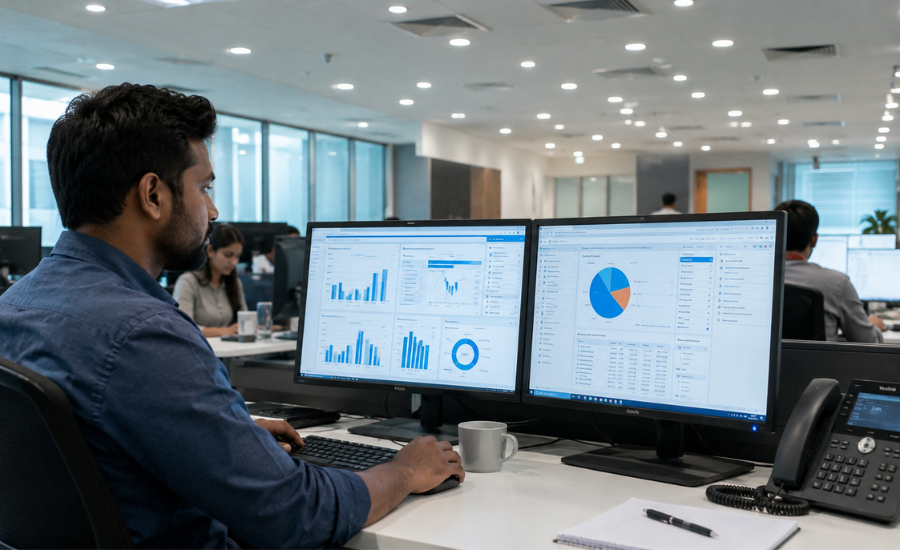
Improve business performance with Sales Purchase Data Analysis for forecasting, reporting, inventory optimization, and growth.
Modern Sales Purchase Data Analysis platforms integrate with ERP systems, CRM software, accounting applications, inventory management tools, and business intelligence platforms. By leveraging advanced analytics, dashboards, and reporting systems, organizations can make informed decisions, reduce costs, increase profitability, and enhance overall business performance.
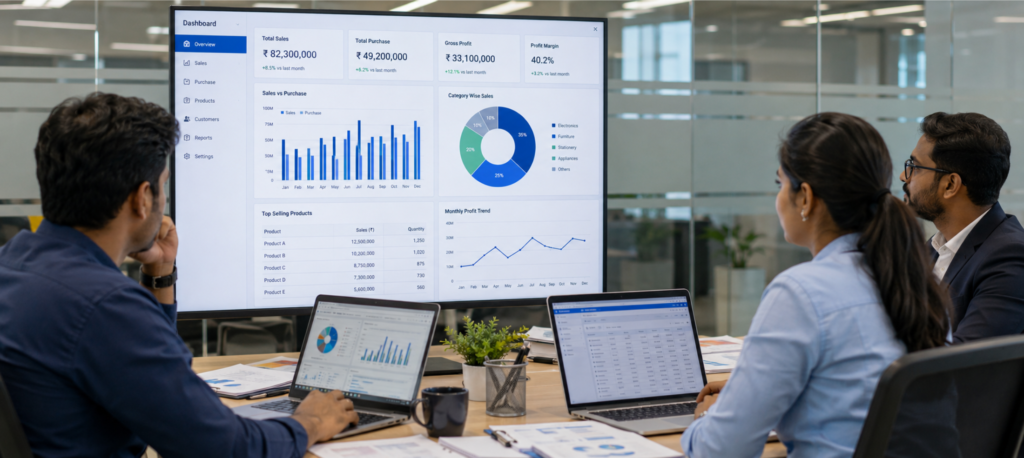
Sales Purchase Data Analysis helps businesses convert sales and procurement data into actionable insights that improve decision-making, profitability, and operational efficiency. Organizations generate large volumes of information through invoices, sales orders, purchase orders, inventory transactions, supplier records, customer purchases, and financial reports. Without proper analysis, valuable business intelligence often remains hidden within complex datasets.
Businesses across manufacturing, retail, wholesale, distribution, healthcare, logistics, and eCommerce sectors rely on Sales Purchase Data Analysis to identify sales trends, understand customer purchasing behavior, evaluate supplier performance, optimize inventory levels, and improve forecasting accuracy. These solutions provide comprehensive visibility into revenue generation, procurement activities, and operational performance.
Whether the objective is improving sales performance, streamlining procurement processes, optimizing inventory management, or strengthening strategic planning, scalable Sales Purchase Data Analysis solutions help businesses achieve sustainable growth and operational excellence.
Why Sales Purchase Data Analysis is Important
Improves Revenue Growth
Identify top-performing products, regions, and customer segments to increase sales performance.
Optimizes Inventory Management
Reduce stock shortages and excess inventory through data-driven forecasting.
Enhances Procurement Efficiency
Monitor purchasing patterns and supplier performance to improve procurement operations.
Supports Better Decision-Making
Transform raw business data into actionable insights for strategic planning.
Increases Profitability
Identify cost-saving opportunities and improve profit margins through detailed analysis.
Strengthens Customer Understanding
Analyze customer buying behavior and purchasing preferences effectively.
Improves Forecasting Accuracy
Use historical trends to predict future sales and purchasing requirements.
Reduces Operational Risks
Detect inefficiencies, anomalies, and performance gaps before they impact operations.
Types of Sales Purchase Data Analysis Solutions
- Sales Performance Analysis Solutions
Analyze revenue trends, product performance, sales growth, and regional performance. - Purchase Data Analysis Solutions
Evaluate procurement activities, vendor performance, and purchasing efficiency. - Inventory Analysis Solutions
Monitor stock movement, inventory turnover, and replenishment requirements. - Customer Purchase Behavior Analysis Solutions
Understand buying patterns, purchasing frequency, and customer preferences. - Supplier Performance Analysis Solutions
Track supplier reliability, delivery timelines, and procurement costs. - Profitability Analysis Solutions
Measure product-wise, customer-wise, and region-wise profitability. - Sales Forecasting Solutions
Generate predictive insights using historical sales and procurement data. - Business Intelligence Dashboard Solutions
Create interactive dashboards for real-time business monitoring. - Industry-Specific Sales Purchase Data Analysis Solutions
Customized analytics solutions for manufacturing, retail, logistics, healthcare, and wholesale businesses.
Key Features of Sales Purchase Data Analysis
- Real-Time Data Monitoring
Access up-to-date sales and purchasing information instantly. - Interactive Dashboards
Visualize business performance through charts, graphs, and KPI dashboards. - Advanced Reporting Systems
Generate detailed reports for management and decision-makers. - Sales Trend Analysis
Identify growth opportunities and seasonal demand patterns. - Purchase Pattern Analysis
Monitor procurement trends and supplier-related insights. - Inventory Optimization Tools
Improve stock management and reduce inventory-related costs. - Profitability Tracking
Analyze margins, costs, and revenue contributions efficiently. - ERP & Accounting Integration
Connect seamlessly with leading enterprise and accounting platforms. - Automated Alerts & Notifications
Receive alerts for unusual sales activities and purchasing anomalies. - Scalable Analytics Infrastructure
Support growing business operations and increasing data volumes.
Development Process
- Requirement Analysis
Understand business objectives, workflows, reporting requirements, and performance goals. - Data Source Assessment
Analyze ERP systems, accounting software, CRM platforms, and databases. - Data Collection Planning
Define strategies for gathering and validating business data. - Analytics Framework Design
Build scalable data models and reporting structures. - Integration & Data Migration
Integrate data sources and migrate historical records. - Dashboard & Report Development
Create custom reports and business intelligence dashboards. - Analytics Implementation
Deploy sales analysis, procurement analytics, and forecasting models. - Testing & Validation
Verify data accuracy, reporting consistency, and system performance. - Deployment & User Training
Launch the solution and train stakeholders for effective usage. - Maintenance & Technical Support
Provide ongoing optimization, updates, and analytics support.
Technology Stack for Sales Purchase Data Analysis
- Backend Technologies: Python, Node.js, Java, PHP, .NET
- Frontend Technologies: React.js, Angular, Vue.js
- Business Intelligence Tools: Power BI, Tableau, Looker, Qlik Sense
- Database Systems: PostgreSQL, MySQL, MongoDB, Microsoft SQL Server
- Analytics Frameworks: Pandas, NumPy, Apache Spark, TensorFlow
- Cloud Platforms: AWS, Microsoft Azure, Google Cloud Platform
- Data Warehousing Solutions: Snowflake, Amazon Redshift, Google BigQuery
- ERP Integrations: SAP, Oracle ERP, Microsoft Dynamics, NetSuite
- Accounting Software Integrations: Tally, Zoho Books, QuickBooks, Xero
- API Technologies: REST APIs, GraphQL, Webhooks
- DevOps & Deployment: Docker, Kubernetes, CI/CD Pipelines
Cost Factors of Sales Purchase Data Analysis
The overall pricing depends on data complexity, business requirements, integration needs, and reporting objectives.
- Data Volume
Large datasets require advanced storage and processing infrastructure. - Number of Data Sources
Multiple systems increase integration and implementation efforts. - Dashboard & Reporting Requirements
Customized dashboards affect development scope and project costs. - ERP & Accounting Integrations
Enterprise software integrations influence implementation expenses. - Advanced Analytics Features
Predictive analytics and machine learning capabilities increase investment. - Data Cleansing Requirements
Data quality improvement efforts impact project timelines and costs. - Cloud Infrastructure Requirements
Hosting, storage, and scalability contribute to operational expenses. - Maintenance & Support
Ongoing updates and technical support affect recurring costs.
Latest Trends
- AI-Powered Business Analytics
Artificial intelligence improves forecasting and business decision-making. - Predictive Sales Analysis
Organizations use predictive models to identify future growth opportunities. - Real-Time Analytics Dashboards
Businesses increasingly rely on live reporting for faster decisions. - Automated Data Visualization
Advanced visualization tools simplify complex business data interpretation. - Cloud-Based Analytics Platforms
Cloud-native solutions provide scalability and remote accessibility. - Machine Learning Forecasting Models
Intelligent forecasting improves sales and procurement planning. - Self-Service Business Intelligence
Business users can access reports and insights without technical expertise. - Integrated Data Ecosystems
Companies connect ERP, CRM, accounting, and analytics platforms into unified systems.
Why Choose Us for Sales Purchase Data Analysis
Expertise in Business Analytics Solutions
We provide scalable Sales Purchase Data Analysis solutions tailored to operational and strategic business goals.
Advanced Reporting & Visualization
Our dashboards simplify complex data and improve business visibility.
Comprehensive Data Integration
We integrate analytics platforms with ERP, CRM, accounting, and inventory systems.
Scalable Analytics Infrastructure
Our solutions support growing data volumes and expanding business operations.
Accurate Business Insights
We focus on delivering reliable, data-driven insights for better decision-making.
Industry-Specific Expertise
We support manufacturing, retail, healthcare, logistics, wholesale, and eCommerce businesses.
Forecasting & Performance Optimization
Our analytics frameworks improve planning, forecasting, and operational efficiency.
Dedicated Technical Support
Our team provides continuous monitoring, optimization, and support services.
Ready to transform your business data into actionable insights?
Contact us today for a free consultation and customized quote.
Let’s build a powerful Sales Purchase Data Analysis solution that drives growth and profitability.
Sales Purchase Data Analysis is the process of analyzing sales and procurement data to improve business performance, forecasting, and decision-making.
It helps organizations identify trends, control costs, improve efficiency, and make informed strategic decisions.
Yes, it can integrate with ERP systems, CRM platforms, accounting software, inventory management tools, and other business applications.
Yes, advanced analytics tools can predict future demand, revenue trends, purchasing requirements, and inventory needs.
Manufacturing, retail, wholesale, healthcare, logistics, distribution, and eCommerce businesses can benefit significantly.
Yes, interactive dashboards provide real-time visibility into key metrics, helping businesses respond quickly to changing conditions.